
March Message: On The Changed Landscape, I’m Mostly Pleased With What I See

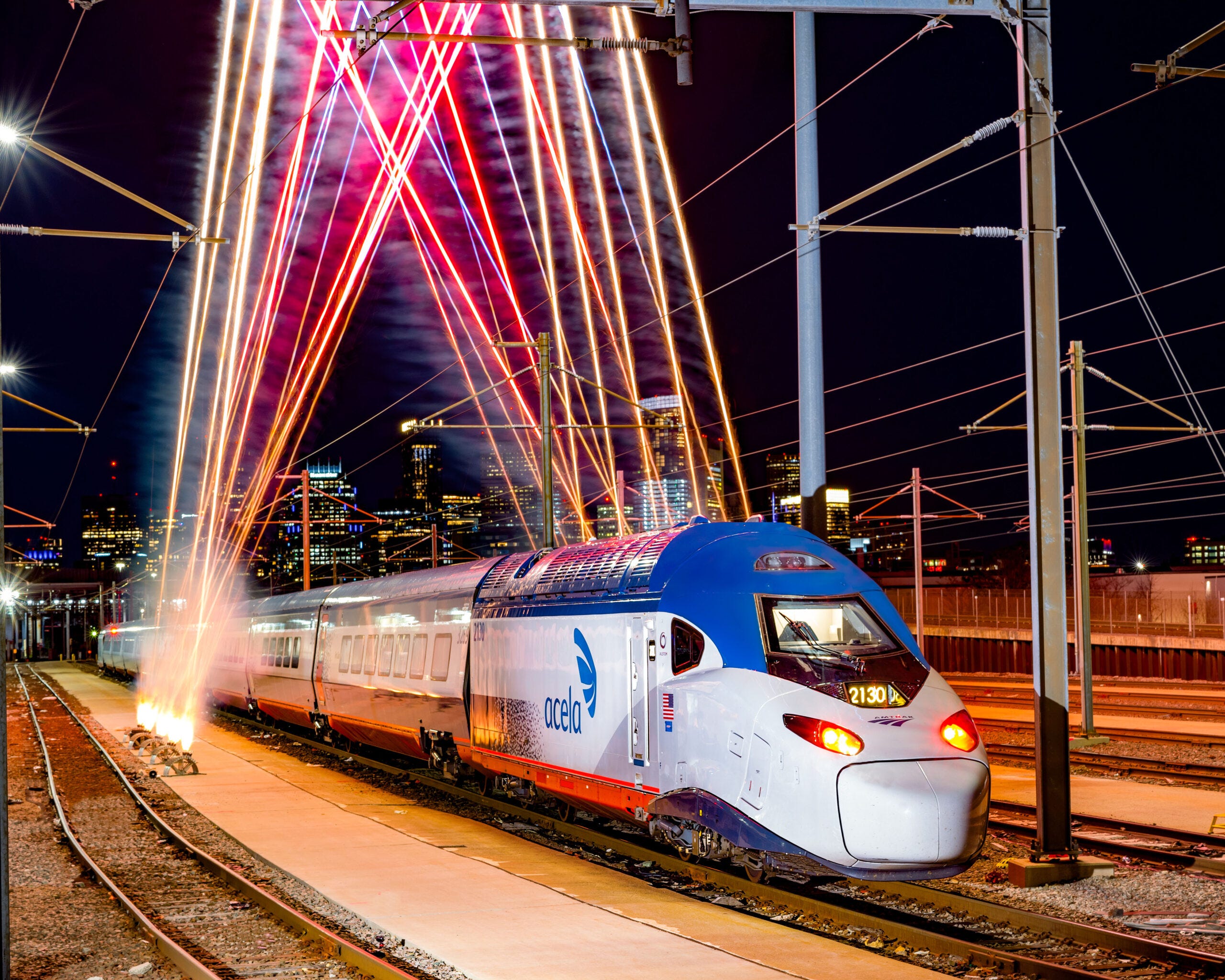
I’ve never been more excited about American passenger rail than I am right now!
Amtrak
Network Highlights
Amtrak ridership nationwide is the highest it’s ever been in the carrier’s 55-year history! 34.5 million trips were taken by passengers in Fiscal Year 2025; a 5.1 percent improvement over FY 2024’s passenger trip-count figure.
Underscoring the growing demand for Amtrak across the United States, the company closed Fiscal Year 2025 (FY25) with record ridership and revenue – marking another year of growth and strong performance. These results were achieved alongside improvements in the customer experience, reinforcing Amtrak’s commitment to quality service as the foundation for future growth.
“‘Amtrak’s operational success is not just about moving more people — it’s about moving them better,’ said Amtrak President Roger Harris. ‘These results show what’s possible when we lead with purpose. By prioritizing reliability and the customer experience, we’re laying the foundation for the next generation of passenger rail in America.’”
From the same Nov. 18, 2025 Amtrak news release*, there is also this:
Amtrak provided 34.5 million customer trips – setting all-time records for both ridership and revenue for the second consecutive year. Through deliberate planning and thoughtful execution, Amtrak increased network capacity by 4.3% despite the challenges of an aging fleet – and customers responded with a strong demand for quality service, driving revenue that outpaced ridership.
And in the The Way Ahead (“Section Three” in my 2013 ebook The Departure Track: Railways of Tomorrow, published at Amazon) section, there is this.
As this is being written, American high-speed rail has yet to really gel. There is no telling when, or if, this will happen. Sure, there is Amtrak’s 150 mph (165 mph capable) Acela Express trainsets. However, by industry and/or government estimations, to bring the Northeast Corridor (NEC) - on which Acela Express and other Amtrak passenger trains operate - up to world class, high-speed rail operating standards, $151 billion in [sic] (2012 dollars), will need to be invested….
Meanwhile, Joe Boardman, Amtrak President and Chief Executive Officer since 2008, offered his perspective in Amtrak: An American Story.
What Boardman had conveyed in the part referenced in my ebook is that he envisioned an upgraded Northeast Corridor. On top of this Boardman envisaged a 220 mph capability contingent upon a new routing through the New England portion north of New York being established. The thinking here is if the line can be made straighter, train and track speed can be increased.
Meanwhile, it’s ditto for the NEC in the Mid-Atlantic region between New York and D.C., corridor tweaks envisaged in both Baltimore and the “City of Brotherly Love” (Philadelphia) that could furthermore result in enhanced service levels coming to city centers where served.
The bottom line is, improve the service and the demand for such goes up.
As I see it though, associated spending to bring all this about must be kept under control.
Congestion Pricing
Congestion pricing. There’s really nothing mysterious or magical about it. The premise is simple. Motorists pay a fee for the right to drive into a specified region. The charged fee, in turn, gets invested in programs or efforts to help mobility across the board improve.
The congestion-pricing scheme launched in New York City, I would say, is a resounding success. Traffic congestion below 60th Street in the Central Business District has been reduced as a result of the program going into effect. But, not just that. The monies collected, or a significant portion thereof, are being invested in public transit. Moreover, the quality of the air below 60th Street and around the region in general has improved. But most significantly, the congestion in the affected area has been markedly lowered. The scheme has made quite a difference.
High-speed Rail
Highlights — California
I wish I had more to report on about high-speed rail other than what’s just going on in California. But, alas, I do not.
So, I want to start by mentioning the paper: Learning from California: Lessons Drawn from California High-Speed Rail for Other Large Infrastructure Projects, published in Oct. 2025 by former Northern California Regional Director at the California High-Speed Rail Authority, Boris Lipkin. He provided oversight on 160 miles of the state’s HSR network in northern California.
In his “Conclusion” Lipkin wrote:
While much work remains on the HSR project, I firmly believe that the project is now past the point of no return and California will have a high-speed rail system. The main questions that remain will be how much of a high-speed rail system how soon and what future lessons that will offer.
So, there’s that.
Transit — Passenger Rail
In The National Spotlight — Transit Ridership
From the 2025 Public Transportation Fact Book,** p. 3, the American Public Transportation Association reports:
Heavy rail ridership increased 15 percent from 2022 to 2023, to 2.60 billion trips. Light rail and streetcar ridership increased by 21 percent from 2022 to 2023, to 314 million trips. Commuter and hybrid rail ridership increased by 21 percent from 2022 to 2023, to 328 million trips.
In The National Spotlight — Miles Traveled
Another important metric to look at is the number of miles traveled. Passenger miles traveled was 39.7 billion.**
A Quick Review On Safety
Railroad safety isn’t the easiest subject to talk or write about, without maybe hurting some feelings in the process sometimes. I once got into a tit-for-tat with a magazine editor of all people. This person and I disagreed on what constituted trespassing. The way I look at it, if someone is traipsing across my front yard and this person wasn’t invited or given formal authorization to be there, then that, to me, is an example of trespassing.
So I don’t remember specifically what we bickered about. It’s too long ago. But, it had something to do with being on railroad property without having received proper authorization to be there beforehand. At the end of the day, the two of us agreed to disagree and that’s where we left things.
More importantly, I think, is just using common sense when enjoying the activity of train watching. And by no means should anyone ever knowingly put themselves in harms way. The railroad can be a dangerous environment. It should be respected.
And, I would just like to add regarding the times I spent trackside, most every time I did that, I was granted ahead of time permission to be there. Not always; but most times, mind you. The times I was on property without authorization I was taking a risk. When I learned better, I stopped taking that risk. For me, the risk-taking just wasn’t worth it.
I’ll end this discussion with sage advice I got from a teacher once who admonished: “Leave nothing to chance.”
* “Amtrak: A Year of Records,” a Nov. 18, 2025 Amtrak news release. Representative URL: https://media.amtrak.com/2025/11/amtrak-a-year-of-records/
** APTA Fact Book Analysis, 2025 Public Transportation Fact Book, p. 3. Representative URL: https://www.apta.com/wp-content/uploads/APTA-2025-Public-Transportation-Fact-Book.pdf
Related: “Transit Progress: Report”, a Jan. 27, 2026 All About Trains post. Representative URL: https://allabouttrains.substack.com/p/transit-progress-report
Updated: Feb. 14, 2026 at 4:37 p.m. PST.
All material copyrighted 2026, Alan Kandel. All Rights Reserved.